Bridging Innovation and Regulation: Highlights from the IncreaseNET 2026 Innovation Symposium
22.01.2026
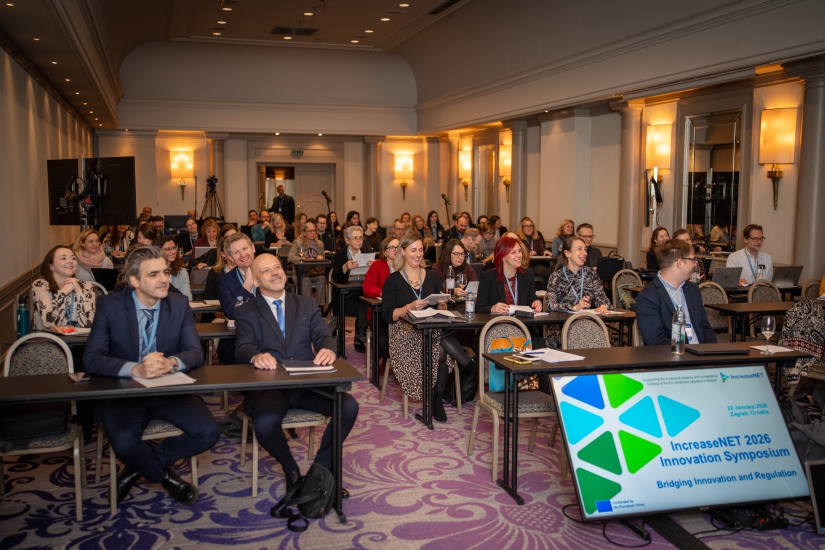
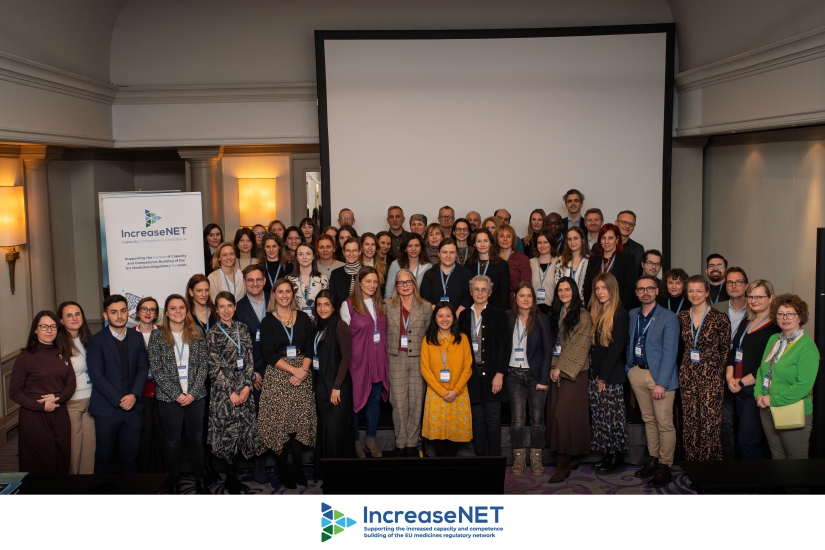
On 22 January 2026, Zagreb, Croatia, once again became a meeting point for regulatory collaboration as the IncreaseNET 2026 Innovation Symposium: Bridging Innovation and Regulation brought together 134 participants, both onsite and online. The audience represented EU/EEA countries, Ukraine and Montenegro, alongside colleagues from the European Medicines Agency (EMA), HaDEA1 and the European Commission’s DG SANTE. The symposium offered a focused space to explore how regulatory systems can keep pace with scientific innovation through new skills, new tools and stronger collaboration.
A Shared Commitment to Innovation-Ready Regulation
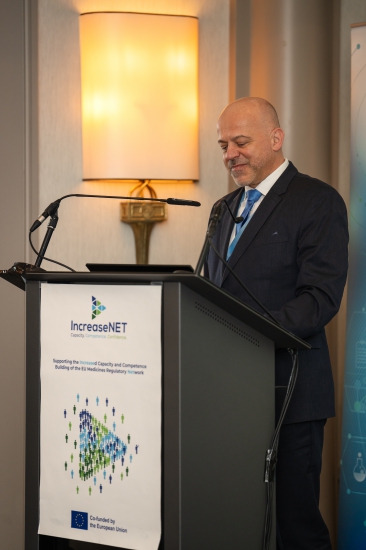
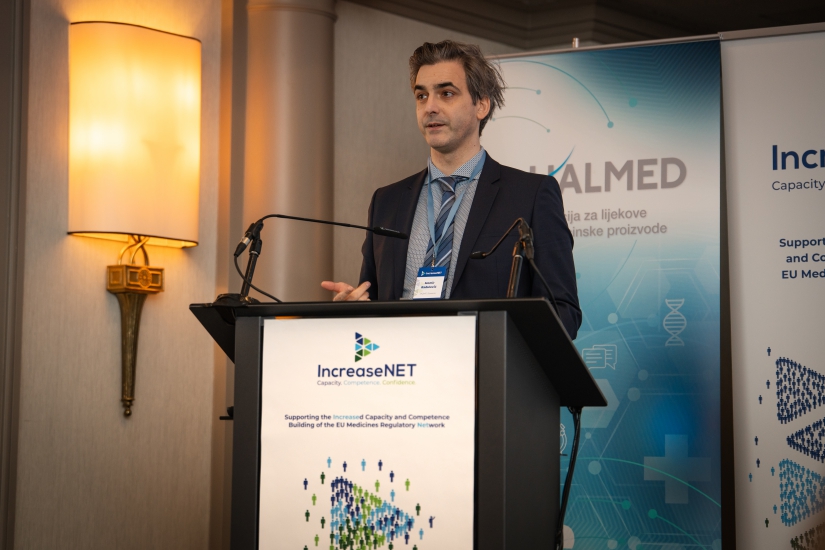
The symposium opened with a joint welcome from Siniša Tomić, Head of HALMED2, and Momir Radulović, Head of JAZMP3. Director Tomić highlighted how the past two years have shaped IncreaseNET into a dynamic platform for knowledge exchange, mutual support and the development of forward-looking regulatory solutions, helping regulators stay closely aligned with scientific advances and new cooperation models. This contributes not only to more efficient regulatory procedures, but also to faster access to safe, effective and innovative medicines. Director Radulović echoed this perspective, underlining that innovation is also about people who collaborate, experiment, build a sense of community, and share values across institutions. He added that embedding innovation in regulatory practices strengthens Europe’s attractiveness as a research and development environment.
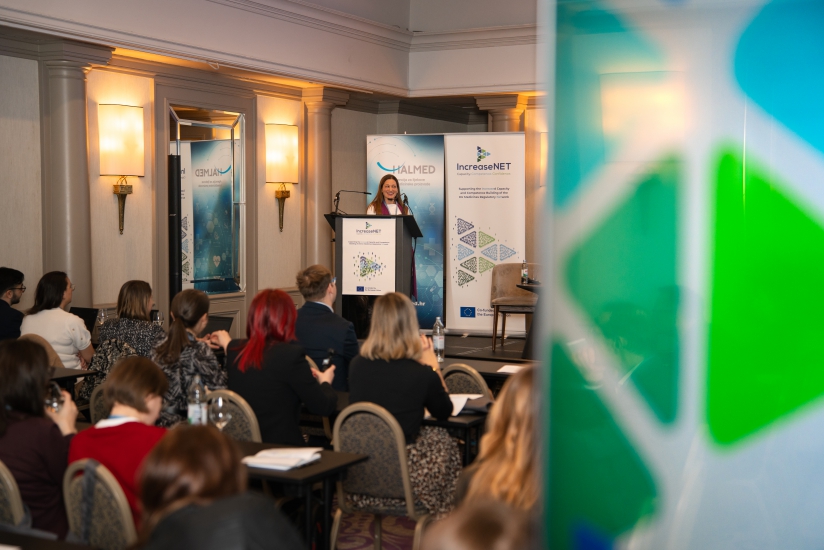
Following the welcome session, Luka Kosec (JAZMP) presented the state of play of the IncreaseNET Joint Action at its 24-month mark, as the project is moving decisively from planning into delivery. The update highlighted advances across several work packages, from training development and the expansion of on-the-job training opportunities to tools supporting innovation and resource efficiency across the European Medicines Regulatory Network (EMRN).
Key Sessions: Strengthening Regulatory Capacity for Innovation
The EU Innovation Network (EU-IN) Overview: The EU-IN, a key stakeholder for IncreaseNET, was presented by EU-IN Co-Chair Laurence O’Dwyer (HPRA4). The EU-IN brings together innovation offices within NCAs5 and the EMA Innovation Task Force with the shared objective of making regulatory support for innovation more visible, accessible and coherent across Europe. The draft EU-IN 2026 workplan presented during the session emphasises regulatory science, horizon scanning, training, borderline classification issues and strengthened governance. The discussion underlined strong alignment between EU-IN priorities and IncreaseNET objectives, particularly in fostering regulatory preparedness for emerging technologies and improving early engagement with innovators.
Empowering Regulators Through Academic Training: Luca Santi (AIFA6) presented IncreaseNET progress on targeted academic training for regulators on high-priority innovation topics. Mapping exercises across NCAs identified priority gaps, ranging from RNA therapeutics and gene editing to organ-on-chip systems and advanced manufacturing methods. Following a public call to European universities and research institutes, academic partners were selected to co-develop e-learning modules, and the first training courses (organ-on-chip technologies and RNA therapeutics) are expected to go live in mid-2026 on the EU Network Training Centre platform.
Innovation Support Across EU NCAs: Elise Le Cloierec (ANSM7) presented findings from a IncreaseNET survey of innovation-support practices across 21 responding NCAs. While organisational models differ, convergence is visible, for example dedicated contact points, defined timelines and written advice reports. The findings also highlighted international collaboration and innovation-oriented activities, growing engagement with academia and SMEs8, quality assurance mechanisms for innovation-related advice, and the growing role of data-driven approaches, including real-world evidence and exploratory use of AI. The next phase will define maturity levels for innovation support and develop practical recommendations that NCAs can use to strengthen their organisational models, processes and strategic positioning.
Simultaneous National Scientific Advice (SNSA) Pilot Project: Christophe Lahorte (FAMHP9) provided an update on SNSA, a work-sharing concept developed within the EU-IN, in response to applicants often seeking national scientific and regulatory advice from NCAs in parallel, leading to inefficient use of EMRN resources and, at times, inconsistent guidance. Since its launch in 2020, SNSA has handled more than 130 requests, with 19 NCAs participating on a voluntary opt-in basis, demonstrating clear value in improving the consistency and efficiency of advice, particularly at early development stages. Challenges were also addressed, such as the resource intensity of multi-NCA procedures and adherence to timelines. SNSA is now being refined to improve feasibility and sustainability, with proposed evolutions including stronger roles for lead NCAs, more flexible bilateral and trilateral formats, and simplified procedures.
Pre-Grant Regulatory and Scientific Advice (PGRSA) Concept: The PGRSA concept, designed to provide early regulatory input before grant applications are submitted, was presented by Bettina Ziegele (PEI10), with a focus on possibilities for its further development within the IncreaseNET project. Results from a PGRSA-related survey of academia, performed within IncreaseNET, show strong demand for such early engagement, particularly for guidance on clinical trial design, regulatory documentation and data requirements. The next activities will include outreach to funding bodies to reflect feedback from academia and define the scope and feasibility of establishing and implementing a practicable PGRSA concept, with the long-term goal of integrating regulatory expertise into the research planning phase.
Innovation Toolkit for NCAs: Aria Allahverdi (ANSM, FR) showcased practical tools for strengthening early-stage regulatory interaction between NCAs, academia and topic experts. The toolkit is designed to clarify principles for early advice, support the establishment or strengthening of innovation offices, and improve the visibility of available regulatory services at EU level. The toolkit is available for download here.
Innovation Office in Practice: Guillaume Vaquer and Céline Chu (ANSM, FR) provided a real-world perspective on how an innovation office operates in practice, illustrating how early dialogue with innovators can shape feasible development strategies, particularly in complex areas such as paediatric medicines and novel manufacturing approaches.
Anticipating NCAs Organisational Impact - A Grid for Innovation Readiness: The symposium concluded with an interactive workshop led by ANSM colleagues, inviting participants to test a structured grid of criteria newly developed within the IncreaseNET project to assess how innovative technologies affect NCA organisation. The grid guides regulators through a systematic analysis of how new scientific or technological approaches may influence key dimensions, such as assessment, methodologies, required expertise, internal workflows, IT systems and human resource needs. The exercise highlighted that innovation readiness extends beyond scientific assessment and that, by embedding structured impact assessment into everyday practice, NCAs can move from reactive adaptation to strategic preparedness. The grid for impact assessment is available for download here.
From Innovation as an Initiative to Innovation as a Regulatory Practice
The symposium pointed towards a regulatory future in which innovation support is embedded, visible and consistently delivered across the network. The discussions showed how early dialogue, practical tools and closer collaboration can reduce uncertainty for innovators while strengthening regulatory preparedness. Building on several past and ongoing European initiatives, IncreaseNET is helping to bring together previously fragmented efforts into a more coherent, coordinated EU-level approach. Together, these steps are shaping a regulatory environment that is better equipped to evolve alongside scientific and technological change. The conversation continues - next stop: IncreaseNET in Paris.
For more information on IncreaseNET, visit the IncreaseNET Project Page.
Funded by the European Union. Views and opinions expressed are however those of the author(s) only and do not necessarily reflect those of the European Union or HaDEA. Neither the European Union nor the granting authority can be held responsible for them.


1 European Health and Digital Executive Agency (HaDEA)
2 Agency for Medicinal Products and Medical Devices of Croatia (HALMED), Croatia
3 Agency for Medicinal Products and Medical Devices of the Republic of Slovenia (JAZMP), Slovenia
4 Health Products Regulatory Authority (HPRA), Ireland
5 National Competent Authority (NCA)
6 Italian Medicines Agency (AIFA), Italy
7 French National Agency for Medicines and Health Products Safety (ANSM), France
8 Small and medium-sized enterprises (SMEs)
9 Federal Agency for Medicines and Health Products (FAMHP), Belgium
10 Paul-Ehrlich-Institut (PEI), Germany